How to Safely Check and Maintain Your Gas Plumbing Lines
Gas lines are the silent veins running through your home. You rarely notice them, but when something goes wrong, life screeches to a halt. When it comes to gas, there’s no room for guesswork or delay.
At Lords Plumbing, we handle emergencies around the clock. But we’d rather you never have to call us at midnight. Here’s how you can protect your home, keep your family safe, and know when it’s time for emergency plumbing near you.
Why Gas Line Safety Matters ⚠️
Natural gas and propane keep our homes warm, power our stoves, and heat our water. But like a sleeping dragon, gas is powerful—and dangerous if mishandled.
A small leak can lead to fire, carbon monoxide poisoning, or even explosions. In fact, the National Fire Protection Association (NFPA) reports thousands of residential gas incidents every year. Local codes and the International Fuel Gas Code set strict rules for installation and inspection for good reason.
Ignoring gas line safety isn’t just risky. It’s illegal in many places.
Signs of Gas Leaks
Gas leaks rarely announce themselves with a trumpet. Instead, the warnings are subtle—sometimes only a whisper.
Look for these clues:
- Rotten Egg Smell: Utility companies add mercaptan, a chemical that smells like sulfur or rotten eggs, so you can detect leaks.
- Hissing or Whistling: A soft hiss, especially near a pipe joint or appliance, is a big red flag.
- Pilot Lights Out: If your furnace, water heater, or stove’s pilot keeps going out, something’s up.
- Dead or Dying Plants: Plants suddenly withering near gas lines? The soil might be saturated with gas.
- Bubbles in Water: See bubbles in standing water above buried gas lines outside? That could mean a leak.
- Carbon Monoxide Alarm: If your CO detector goes off, leave the house. Invisible, odorless, deadly—there’s no room for doubt.
Never ignore these signs. Even if you’re not sure, treat it as an emergency.
DIY Safety Checks
You don’t need a toolbox full of gadgets to do simple checks. Think of these steps as tightening your seatbelt before a drive.
- Sniff Test: Walk slowly along gas lines and connections. Any unusual odor? Time to act.
- Listen: In a quiet room, listen near appliances. Hissing or whistling means shut off the gas and call for help.
- Check Appliance Flames: Blue flames are normal. Yellow or orange could mean incomplete combustion or a leak.
- Inspect for Rust or Damage: Visible corrosion or dents? That’s a weak spot waiting to fail.
- Look at Shutoff Valves: Make sure you know where they are and that they turn smoothly.
Never use a flame or cigarette to check for leaks. If you want to test a suspected area, use a soapy water solution. Bubbles mean trouble.
Professional Gas Line Maintenance
DIY checks are like checking the oil in your car. Good, but not enough.
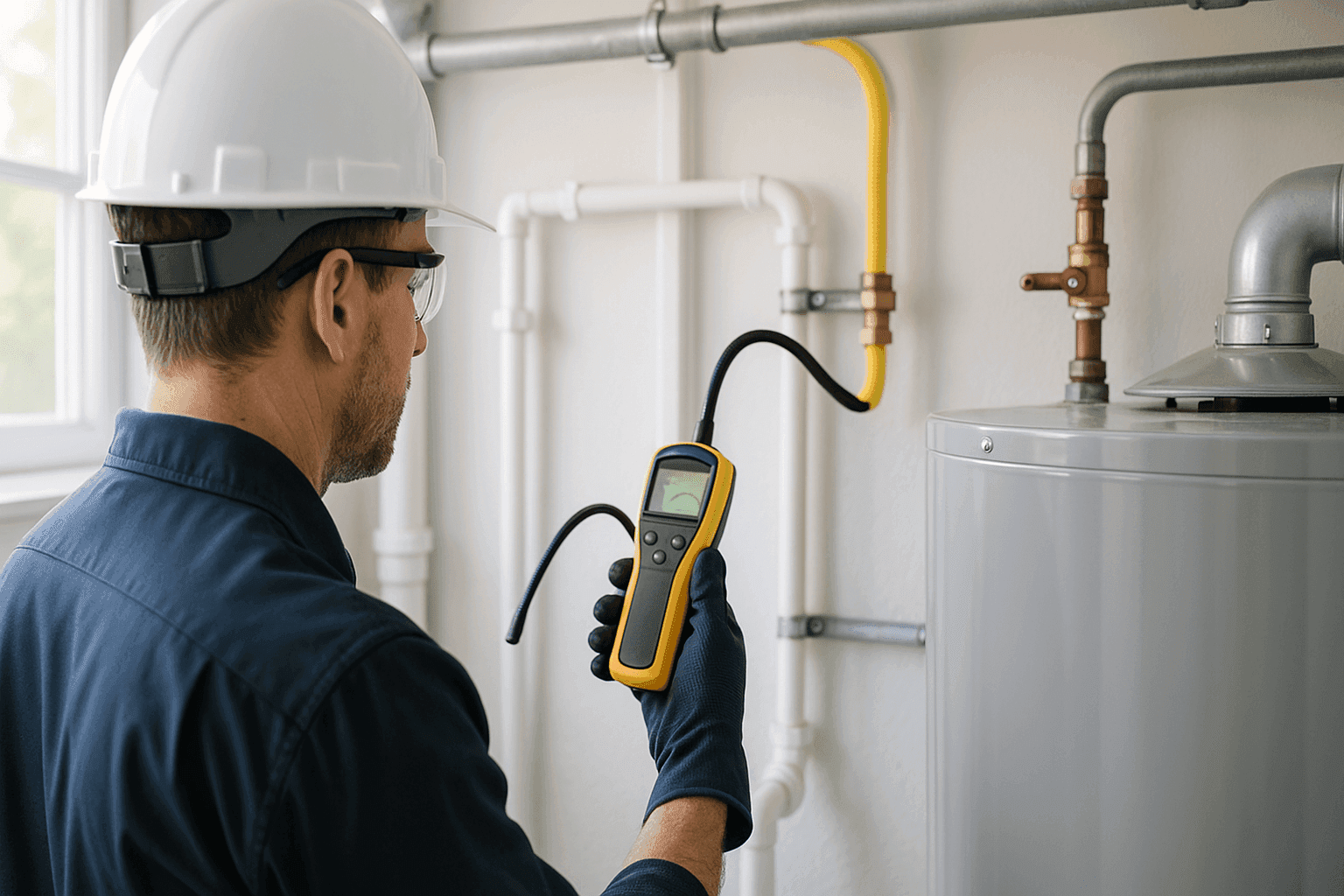
Licensed plumbers—like our background-checked team at Lords Plumbing—use specialized tools and follow local codes. We check pressure, scan for leaks, and inspect connections that a homeowner might miss. In many places, only certified professionals can legally repair or alter gas lines.
A professional inspection covers:
- Pressure Testing: Ensures no slow leaks.
- Leak Detection Tools: Gas detectors find invisible leaks.
- Appliance Checks: Verifies safe operation.
- Code Compliance: Ensures your system meets the latest standards.
A great plumber is like a detective—methodical, thorough, and never guessing.
Emergency Steps
Gas leak? Don’t hesitate. Every second counts.
- Evacuate: Get everyone outside. Don’t use lights or electronics.
- Call for Help: Dial 911 or your local gas utility.
- Shut Off Gas: If it’s safe, turn off the main gas valve.
- Wait for Pros: Don’t go back inside until cleared by emergency personnel.
If you’re ever wondering if it’s an emergency, it probably is.
Quick Safety Checklist ✅
- Know where your gas shutoff valve is.
- Install carbon monoxide detectors on every floor.
- Test CO and smoke alarms monthly.
- Don’t store flammables near gas appliances.
- Schedule annual professional gas line inspections.
- Teach everyone in your home what gas smells like and what to do in an emergency.
A little preparation goes a long way.
DIY vs. Call a Pro
Some things in life are best left to the professionals. Gas work is one of them.
Good for DIY:
- Testing with soapy water.
- Checking for obvious signs (smell, sound, visible damage).
- Knowing shutoff procedures.
Call a Pro For:
- Any repair or installation.
- When you suspect a leak but can’t find it.
- Annual inspections.
- Upgrading or replacing appliances.
- After any seismic activity or ground movement.
Remember, tampering with gas lines without a license is illegal in many states. It’s not just about safety—it’s the law.
What Pros Do On Arrival
When you call Lords Plumbing for emergency plumbing near you, here’s what happens:
- Assessment: We start outside, checking the meter and main shutoff.
- Detection: Using sensitive gas detectors, we trace the leak’s exact location.
- Isolation: We shut off affected sections and ventilate the area.
- Repair: Only after the area is safe do we repair, replace, or re-seal the lines.
- Testing: We re-pressurize and test the entire system before restoring service.
- Documentation: We provide you with a service record, often required for home insurance or building codes.
Our licensed team follows all local and national codes, so you can sleep easy.
Prevention & Maintenance 🛠️
Think of gas line care like changing the batteries in your smoke detector—essential, but easy to forget until it’s too late.
- Annual Inspections: Schedule a pro visit every year.
- Replace Old Pipes: If your home is older, consider upgrading from steel to safer modern materials.
- Keep Vents Clear: Blocked vents can cause dangerous gas buildup.
- Watch Landscaping: Don’t plant trees or shrubs too close to buried gas lines.
- Upgrade Appliances: Modern gas appliances are safer and more efficient.
- Stay Informed: Regulations, codes, and safety recommendations change. Stay up to date.
Check recommendations from the U.S. Consumer Product Safety Commission and your local building department for guidance.
Costs & Time Factors
Gas line work isn’t one-size-fits-all. Here’s what can affect the price and time:
- Extent of Damage: Small leaks at a fitting are quicker than replacing a whole line.
- Accessibility: Hard-to-reach pipes (behind walls, under floors) take longer.
- Permitting: Some repairs require city permits or inspections, which can add time.
- Material: Copper, steel, and flexible gas lines each have different costs.
- Emergency vs. Scheduled: After-hours or emergency plumbing work can cost more.
On average, most minor repairs take a few hours. Major replacements or new installations can run a day or more.
When It’s an Emergency
Don’t wait for a second opinion if you notice:
- Strong gas odor.
- Carbon monoxide alarm sounding.
- Hissing sounds from pipes or appliances.
- Multiple pilot lights out at once.
- Dizziness, nausea, or headaches when indoors.
Get out. Call for emergency plumbing near you. We’re always ready—day or night.
FAQ
How often should I get my gas lines checked?
At least once a year. More often if your home is older or if you’ve recently had construction work nearby.
Can I repair a gas leak myself?
No. Most local laws require licensed professionals for gas repairs to meet safety codes.
My carbon monoxide alarm won’t stop beeping—what should I do?
Leave your home immediately. Call emergency services and your gas provider. Do not re-enter until cleared.
Does propane have the same risks as natural gas?
Both are flammable and can cause carbon monoxide poisoning. Propane is heavier than air, so leaks may settle near the floor. Always follow the same precautions.
Local & Seasonal Considerations 🌦️
- Natural Gas vs. Propane: Propane systems are more common in rural areas. Natural gas is usually piped in cities.
- Winter: Cold can crack older pipes. After a freeze, check for leaks.
- Earthquake Zones: Seismic activity can shift or break gas lines. Know where your shutoff is.
- Heavy Rain: Flooding can expose or damage buried lines.
Check with your local fire department or utility company for area-specific advice.
Gas line safety isn’t about paranoia—it’s about being prepared. A few minutes of attention could prevent a lifetime of regret.
Call Lords Plumbing now — or reach us anytime at 877-779-1505 .